
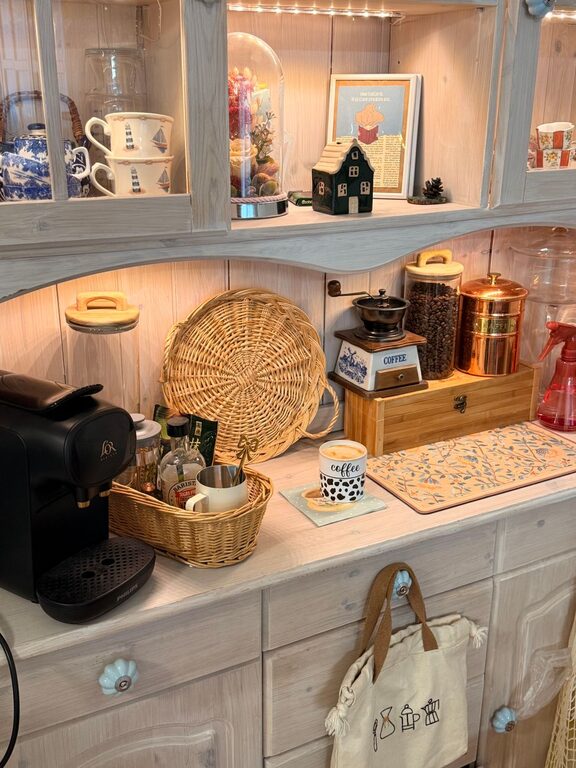
A coffee station can make your morning routine easier, more organized, and a little more enjoyable. Whether you prefer drip coffee, espresso, tea, or an occasional iced drink, a dedicated space keeps your supplies together and adds a welcoming feature to your kitchen.
You do not need a large kitchen or an expensive setup. With a little planning, you can create a coffee station that fits your space, habits, and budget.
Choose the Right Location
The best location for a coffee station is easy to reach and close to the items you use every day. Look for a clear area on a kitchen counter, a small sideboard, a bar cart, or a shelf with enough room for your equipment.
Consider these points before choosing a spot:
– Place it near an electrical outlet if you use a coffee maker, grinder, or electric kettle.
– Keep it away from areas that become crowded during meal preparation.
– Make sure there is enough room to fill a water reservoir and handle hot drinks safely.
– Choose a surface that is sturdy, level, and easy to clean.
– Leave space above the station if your coffee maker has a lid that opens upward.
If your counter space is limited, use a narrow tray or wall shelf to define the station. A rolling cart can also work well because it provides storage while remaining easy to move.
Decide What Your Coffee Station Needs
Before buying organizers or accessories, think about your usual coffee routine. A simple setup may only need a coffee maker, mugs, coffee, and a few basic tools. A more complete station might include an espresso machine, grinder, milk frother, syrups, and drinkware.
Start by listing the items you use regularly. Common essentials include:
– Coffee maker, French press, pour-over dripper, or espresso machine
– Coffee beans or ground coffee
– Electric kettle, if needed
– Mugs or cups
– Coffee filters
– Spoons or a coffee scoop
– Sugar, sweetener, or milk
– A small container for used grounds or tea bags
Avoid filling the station with items you rarely use. Keeping only everyday essentials nearby will make the space look neater and easier to maintain.
Select the Main Equipment
Your coffee maker will usually be the largest item on the station, so choose it first. The right option depends on how much coffee you make, how quickly you want it, and how involved you want the process to be.
Drip Coffee Maker
A drip coffee maker is practical for making several cups at once. It is a good choice for households with multiple coffee drinkers or for anyone who wants a simple routine.
Single Serve Brewer
A single serve brewer takes up less space and can be convenient when people prefer different coffee flavors. Make sure you have a plan for storing pods or capsules without creating extra clutter.
French Press
A French press has a small footprint and does not require electricity. You will also need hot water and a timer or another way to track brewing time.
Pour Over
A pour-over setup is compact and offers more control over the brewing process. It usually includes a dripper, paper filters, a kettle, and a cup or carafe.
Espresso Machine
An espresso machine can become the centerpiece of a coffee station. It may require additional supplies, such as a grinder, tamper, milk pitcher, and cleaning tools, so allow enough room for the full setup.
Add Practical Storage
Good storage keeps the station functional and prevents small supplies from spreading across the counter. Use containers that match your available space and make everyday items easy to see.
Helpful storage ideas include:
– Place coffee beans or grounds in airtight containers with labels.
– Use a small basket for filters, stirrers, and napkins.
– Store mugs on a tray, shelf, or mug tree.
– Keep sweeteners and tea bags in divided organizers.
– Use a drawer for measuring spoons and other small tools.
– Place tall syrups or bottles on a small riser so they are easier to reach.
– Store extra supplies in a nearby cabinet rather than on the counter.
If you use a tray, choose one that is large enough to hold the coffee maker and a few accessories without being difficult to lift. A tray also helps contain spills and visually separates the station from the rest of the kitchen.
Organize for an Easy Morning Routine
Arrange the station in the order you use each item. For example, place coffee and filters near the coffee maker, mugs within easy reach, and sweeteners or milk nearby. This simple arrangement reduces unnecessary movement and keeps the routine smooth.
Keep frequently used items at the front and less-used accessories toward the back. If more than one person uses the station, consider placing common items where everyone can reach them.
You can also create small zones:
– Brewing zone for the coffee maker, filters, and scoop
– Serving zone for mugs, spoons, and napkins
– Flavor zone for sugar, syrups, and spices
– Storage zone for extra coffee and supplies
These zones do not need formal dividers. A tray, basket, or change in shelf position can make each area clear.
Add Personal Style
A coffee station should be useful, but it can also reflect your home’s style. Choose a few decorative details instead of filling the area with unnecessary objects.
Consider adding:
– A framed print or small piece of wall art
– A plant that tolerates indoor kitchen conditions
– A decorative canister set
– A washable runner or small mat
– A chalkboard or simple sign
– Mugs in colors that complement the room
– A wooden or ceramic tray
Use materials that are easy to wipe clean. Coffee grounds, water, and milk can create spills, so practical surfaces are often better than delicate decorative pieces.
For a coordinated look, limit the station to two or three main colors. Matching containers can create a tidy appearance, while different mug shapes can add personality without making the space feel crowded.
Plan for Safety and Cleanliness
Coffee stations involve hot water, steam, and electrical appliances, so safety should be part of the design. Keep cords away from the edge of the counter and avoid placing appliances where water can splash onto outlets or power strips.
Leave enough room to set down a hot mug safely. If children or pets are in the home, place hot appliances and breakable items out of reach when possible.
A simple cleaning routine will keep the station pleasant:
– Wipe the counter and appliance exterior regularly.
– Empty used grounds or disposable pods promptly.
– Wash mugs, trays, and reusable tools often.
– Clean the coffee maker according to the manufacturer’s instructions.
– Check storage containers for stale coffee or expired flavorings.
– Sweep away loose grounds before they spread to other surfaces.
Keep Improving the Setup
Use the station for a week before making major changes. Notice which items you reach for most often and which ones create clutter. You may discover that a basket is too small, a mug shelf is unnecessary, or a certain tool belongs in a nearby drawer.
A successful coffee station does not have to be elaborate. It simply needs to support your routine, fit your available space, and make preparation more convenient. Start with the essentials, add storage where it helps, and finish with a few personal touches. With thoughtful placement and regular upkeep, even a small corner can become a comfortable and useful part of your home.